
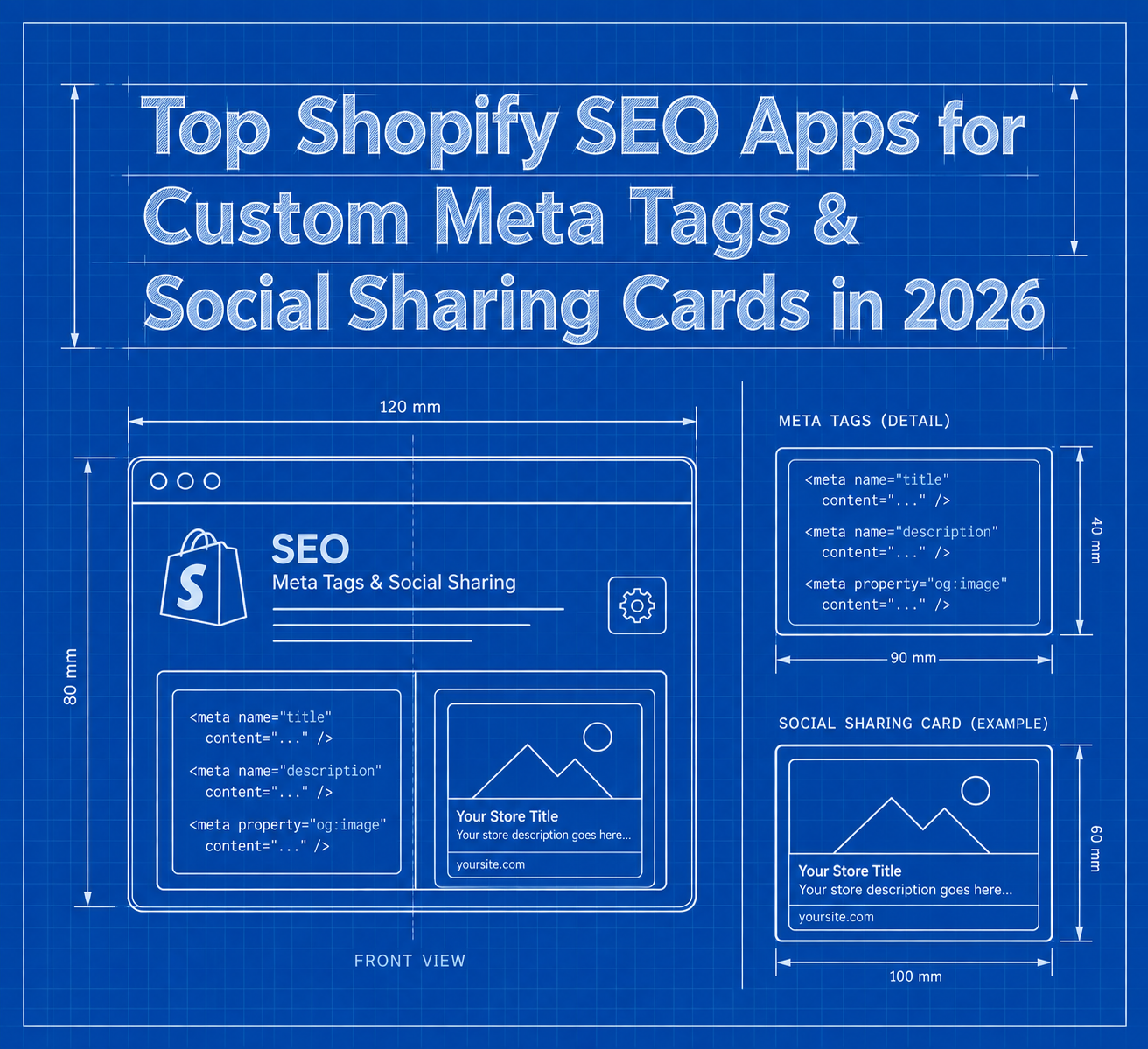
The E-Commerce SEO Landscape in 2026
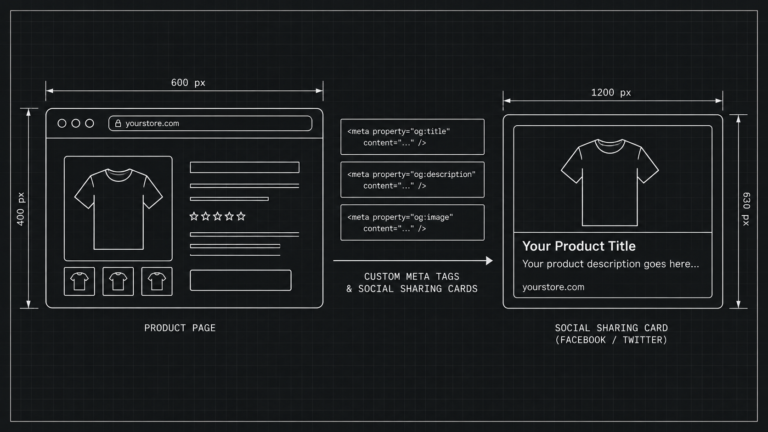
Search engines and social media networks sit at the core of e-commerce discovery. When potential customers share your products across social channels like WhatsApp, X (formerly Twitter), LinkedIn, and Facebook, your preview card dictates your click-through rate (CTR).
Similarly, custom meta titles and descriptions tailored to search engine intent govern your organic rankings.
However, default Shopify themes offer limited control over structured metadata. They often rely on automated dynamic fallbacks that generate poor social previews, cropped images, and truncated search descriptions.
To address these limitations, merchants rely on specialized Shopify SEO applications. Below is an evaluation of the leading Shopify SEO applications in 2026, comparing technical features, site performance impact, and price-to-value ratios.
2026 Comprehensive App Comparison
| Application Name | Theme App Embed (Zero Code) | OpenGraph & Twitter Card Control | Metafield Mapping Support | Performance Impact (PageSpeed Score) | Pricing Model |
|---|---|---|---|---|---|
| MetaMint SEO | Yes (100% Clean) | Complete Customization | Native Integration | Zero Overhead (100/100) | Flat Monthly Rate |
| Plug in SEO | Partial (Modifies Liquid) | Standard Templates | Limited | Minor Overhead (~92/100) | Tiered / Monthly |
| Booster SEO | No (Legacy Injections) | Automated Only | No | Moderate Impact (~85/100) | High Tiered |
| SEO Manager | Partial | Manual Per Page | Basic Metafields | Minor Overhead (~90/100) | Monthly Recurring |
Top 4 Shopify SEO Applications Analyzed
1. MetaMint SEO
MetaMint SEO is a modern metadata management application built for high-growth e-commerce stores. Built entirely on Shopify’s Theme App Embed framework, MetaMint SEO injects precise, highly customizable meta tags and OpenGraph image mappings without adding code directly to your underlying .liquid files.
- Key Strengths: Real-time social preview rendering, native integration with Shopify Metafields, bulk dynamic metadata overrides, zero theme file modification, and lightweight performance footprint.
- Ideal For: Merchants who want complete control over how their products appear on Google and social media platforms without slowing down site performance or breaking theme updates.
2. Plug in SEO
Plug in SEO remains a well-known option in the Shopify ecosystem. It provides structured site audits along with basic structured data updates.
- Key Strengths: Automated broken link checks and structured data templates.
- Limitations: The interface relies on older styling, and setup requires modifying theme files, which can complicate future theme updates.
3. Booster SEO
Booster SEO focuses on automated adjustments for store owners looking for a hands-off approach.
- Key Strengths: Automated alt-text generation and bulk meta tag updates.
- Limitations: Automated tag adjustments can occasionally overwrite specialized product titles, and subscription tiers scale steeply as inventory grows.
4. SEO Manager
SEO Manager offers comprehensive control over error logging, 401 redirects, and basic meta tag adjustments.
- Key Strengths: Robust 404 tracking and integrated redirect tools.
- Limitations: Lacks modern theme app embed support, requiring manual script management when updating theme templates.
Strategic Evaluation Criteria for Merchants
When selecting a metadata and social card optimization engine for Shopify, evaluate these three core pillars:
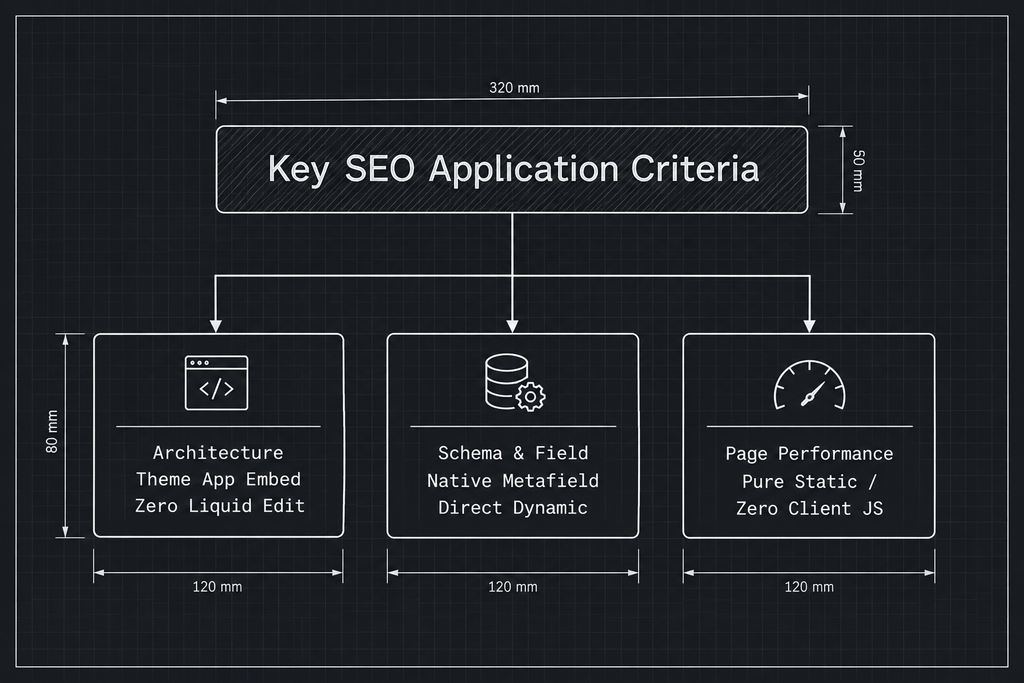
Modern Architecture (Theme App Embeds vs. Legacy Liquid Edits)
Legacy SEO applications edit your theme’s theme.liquid template directly. When you update your theme or switch designs, these code modifications often break, resulting in duplicate meta tags, broken layouts, or lost SEO data. Modern solutions like MetaMint SEO use Theme App Embeds, allowing you to safely toggle app functionality on and off without leaving residual code in your theme.
Deep Integration with Shopify Metafields
Modern Shopify setups rely on Custom Fields (Metafields) to store specialized product attributes like designer names, material composition, custom sizing specs, and secondary images. Your SEO application must read these metafields natively and render them within your meta titles, descriptions, and OpenGraph parameters.
Impact on Site Speed and Performance
Google’s Core Web Vitals prioritize fast page load speeds. Search engine optimization applications should not run heavy JavaScript assets on the client browser. MetaMint SEO renders structured metadata tags server-side on Shopify’s Edge Network, delivering optimized preview data without impacting site speed or user experience.